Trenchless Installation and Tunneling

How trenchless meets each challenge
Microtunneling

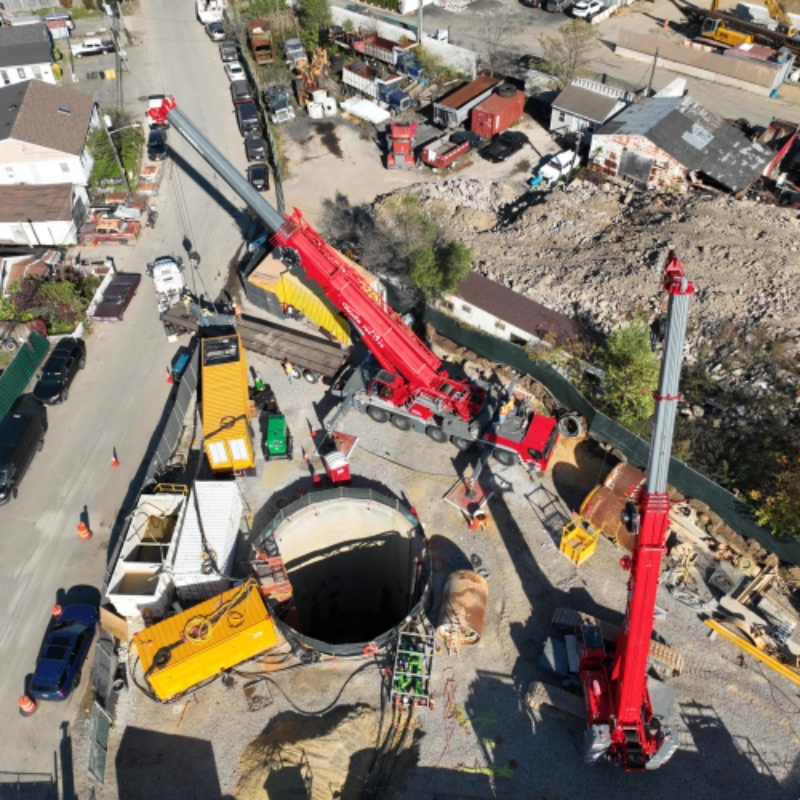
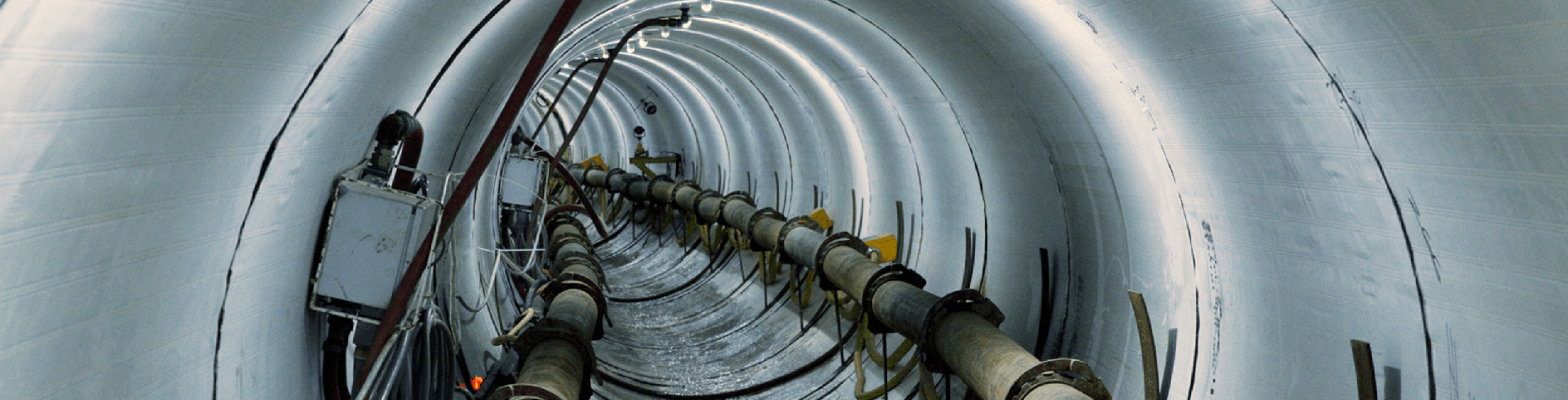
Microtunneling is a highly accurate, remotely operated trenchless method used to install underground pipelines with minimal surface disruption. The process uses a microtunnel boring machine, hydraulic jacking system and continuous face support to advance pipe sections from a launch shaft to a receiving shaft.
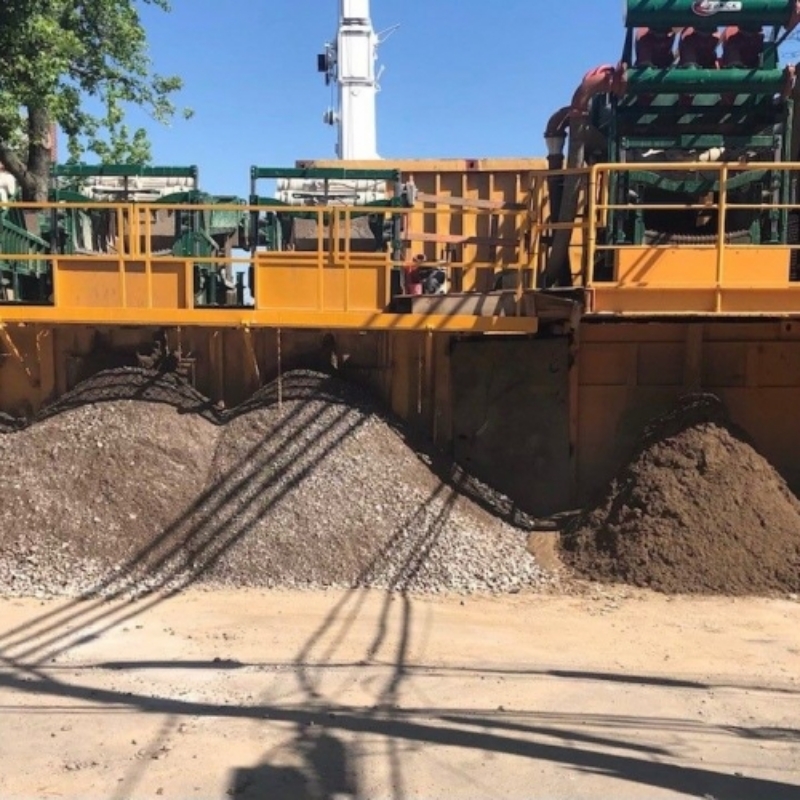
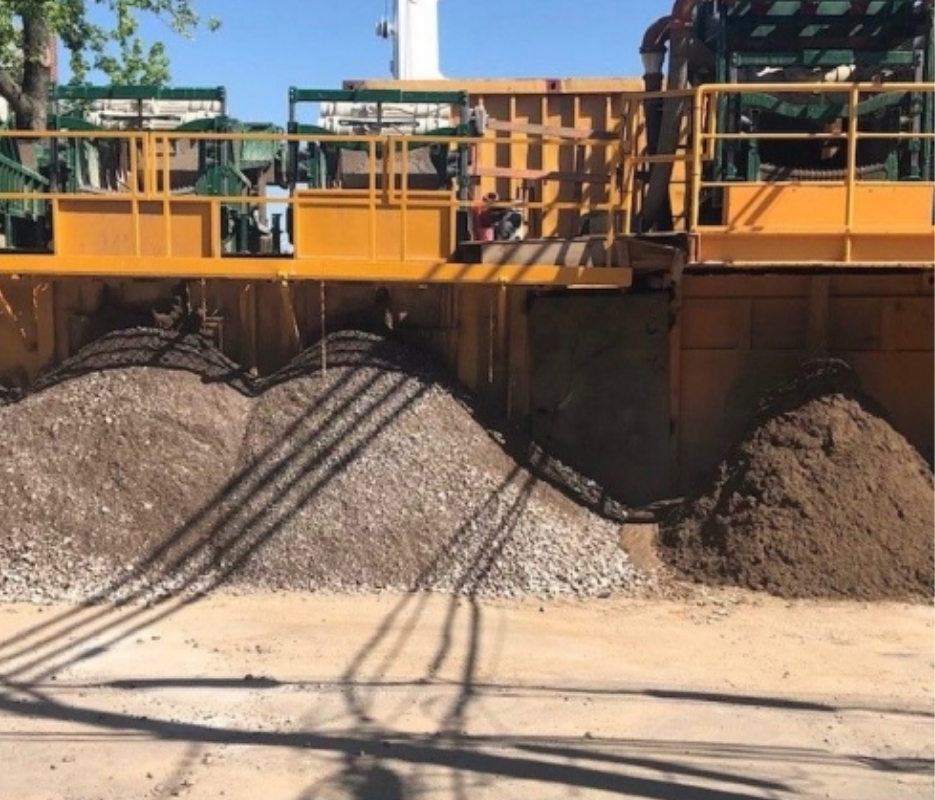
NRC uses slurry microtunneling to balance groundwater and earth pressures at the tunnel face while transporting excavated material through a closed-loop slurry system. This method is well suited for gravity sewer installations, utility crossings, rail and highway crossings, river crossings, congested urban corridors and locations where settlement control, accuracy and worker safety are priorities.
Horizontal Hammer Boring
Horizontal hammer boring uses a pneumatically driven down-the-hole hammer to advance through hard rock and challenging geologic formations. This method is particularly effective where conventional auger boring or drilling methods become inefficient due to rock strength, mixed-face conditions or refusal risk.
When properly applied, horizontal hammer boring can improve penetration rates, maintain line and grade, reduce schedule uncertainty and provide a practical solution for difficult crossings in demanding subsurface conditions.
Guided Boring / Pilot Tube Microtunneling
Guided boring, also known as pilot tube microtunneling, is used for accurate small-diameter pipeline and utility installations. A guided pilot tube establishes precise line and grade before the bore is enlarged and the final casing or carrier pipe is installed.
This method is often used for gravity sewer work and other applications where slope, alignment and minimal surface disruption are critical.
Auger Boring
Auger boring is commonly used to install steel casing beneath railroads, highways and other surface obstructions. A rotating auger removes excavated material from inside the casing while hydraulic jacks advance the casing through the ground.
This method is well suited for short- to medium-length installations in stable soil conditions where surface disruption must be minimized and casing installation is required.
Liner Plate Tunneling
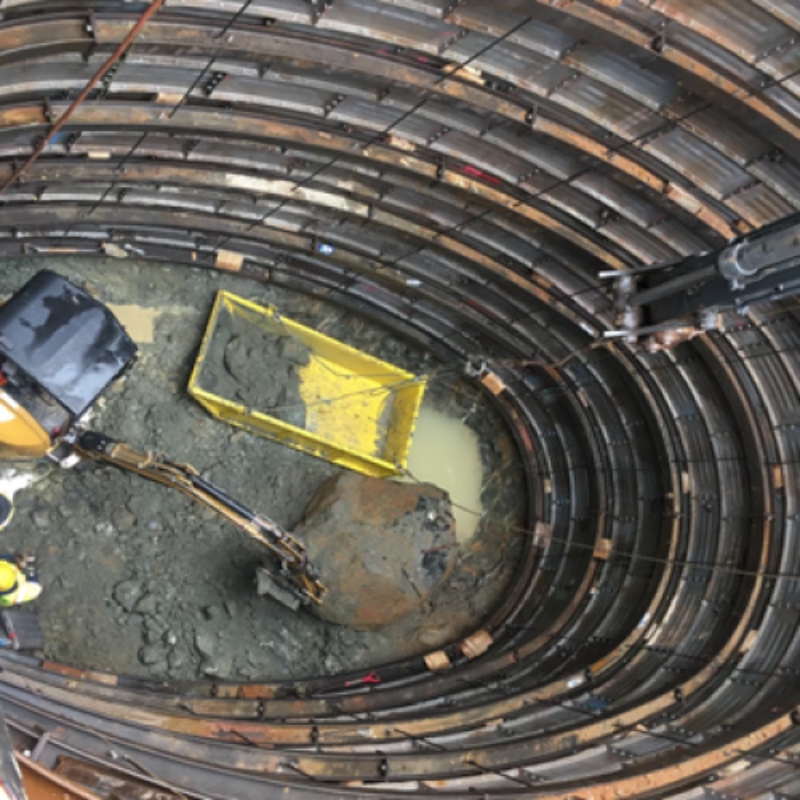
Liner plate tunneling uses curved steel liner plates assembled underground as excavation progresses, providing immediate structural support to the tunnel. This method can be used in soft ground conditions, larger-diameter utility tunnels, pedestrian tunnels and other applications where controlled excavation and adaptable support are required.
Pipe Jacking
Pipe jacking involves hydraulically pushing prefabricated pipe sections through the ground from a launch shaft to a receiving shaft while excavation takes place at the tunnel face. Depending on the project conditions, excavation may be completed by manual or mechanized methods.
Pipe jacking is commonly used for large-diameter pipeline installations beneath roads, railways, waterways, utilities and other sensitive surface features.
Sliplining
Sliplining is a pipeline rehabilitation method used to restore structural capacity and extend service life. A new carrier pipe is inserted into an existing deteriorated pipeline, and the annular space is typically grouted to provide support and improve system integrity.
This method offers a cost-effective, minimally disruptive solution for aging infrastructure where full replacement may be impractical or unnecessarily invasive.
Other Methods
Hand Mining
Hand mining is a conventional tunneling method performed by skilled crews using controlled excavation techniques. It is often used for short tunnel sections, complex connections, utility tie-ins, obstruction removal or locations where mechanical excavation is not feasible.
Hand mining allows crews to closely monitor changing ground conditions and surrounding infrastructure while advancing work in restricted or sensitive environments.

Utilities we’ve installed:
Paragraph(s) here on:
- Gravity sewers
- Power lines
- Sanitary sewers
- Water mains
Environments we support:
- Active highways
- Congested urban streets
- Road and rail crossings
- River and water crossings
- Wetlands
Our trenchless/tunneling clients:
- City of Baltimore Department of Public Works
- New York City Department of Design and Construction
- New York State Department of Environmental Conservation / Nassau
- County Department of Public Works
- Township of Parsippany–Troy Hills
Microtunneling in dense urban environments
Urban infrastructure work leaves little room for error. Existing utilities, traffic patterns, adjacent structures, groundwater, rail operations, environmental constraints and public impact all must be accounted for before excavation begins.
Microtunneling provides a controlled trenchless solution by allowing pipe to be installed with minimal surface disturbance while maintaining precise line and grade. With remote operation, continuous face support and slurry excavation, the method reduces worker exposure at the face, helps manage groundwater pressure and supports accurate installation beneath critical infrastructure.
For owners and engineers, the advantage is clear: fewer surface impacts, improved alignment control, reduced disruption to the public and a more predictable approach to complex underground construction.
Featured Projects
Key projects in Trenchless & Tunneling